
The Yaad Cook's Way

Jamaican Cooking Techniques

You can have the right ingredients and still miss the mark. The secret to authentic Jamaican food isn't just the spices — it's the techniques passed down through generations of grandmothers, market cooks and roadside chefs.

8Core Techniques
1Essential Pot
Generations
Jamaican Cooking
Yaad Skills
Brown It DownBurn the CurrySeason OvernightSlow & LowYaad Style
The 8 Essentials

Techniques Every Jamaican Cook Knows

Master these and your Jamaican food will taste like grandmother made it.

1
Foundation

Marinating Overnight

The first commandment of Jamaican cooking — never cook meat the same day you season it. Always marinate overnight, minimum 4 hours.

📜 The Method
Why It Works

Jamaican meat is always seasoned deep — pierced with a fork, rubbed with salt, garlic, scallion, thyme and pimento, then left to absorb. This is why Jamaican food has flavour through every bite, not just on the surface.

How to Do It

Wash the meat with vinegar or lime juice. Pat dry. Pierce all over with a fork. Rub with salt, black pepper, browning, soy sauce, garlic, scallion, fresh thyme, scotch bonnet and pimento. Cover and refrigerate overnight (or at least 4 hours).
2
Colour & Depth

Browning the Meat

Real Jamaican stew gets its rich brown colour from two things — patient searing and a splash of "browning" sauce. Never skip the sear.

📜 The Method
Why It Works

Searing meat in hot oil creates the Maillard reaction — caramelised proteins and sugars that build deep, savoury flavour. Combined with Jamaican browning sauce (a thick caramel made from burnt sugar), you get that signature mahogany colour.

How to Do It

Heat oil in a heavy pot until smoking. Add the seasoned meat in a single layer — don't crowd. Let each side brown undisturbed for 3-4 minutes before turning. Add a teaspoon of browning sauce in the last minute. Remove the meat and use the dark fond at the bottom of the pot for the gravy.

3
Curry Secret

"Burning" the Curry

Jamaican curry tastes nothing like Indian curry — and the secret is "burning" the curry powder in hot oil before the meat goes in.

📜 The Method
Why It Works

Heating curry powder in oil at the start releases the volatile aromatic compounds and toasts the spices, transforming the flavour from raw and dusty to deep and complex. Without this step, your curry chicken will taste flat.

How to Do It

Heat 2 tbsp of oil in your pot until very hot. Add 2-3 tbsp of Jamaican curry powder. Stir constantly for 60-90 seconds, watching carefully so it doesn't burn black. The colour should darken and the aroma should fill the kitchen. Then add your seasoned meat.

4
The Dutchie

Cooking in the Dutch Pot

Every Jamaican kitchen has a heavy cast iron "Dutchie" — the Dutch pot. It holds heat, distributes it evenly and is the only pot you need for stews, curries and rice.

📜 The Method
Why It Works

The Dutch pot's thick cast iron walls keep food at a steady temperature, preventing scorching while building deep flavour. The heavy lid traps moisture and steam, perfect for slow stews. Inherited from English Dutch ovens but adopted as Jamaican kitchen royalty.

How to Use It

Always preheat slowly. Use medium heat — never high. Build your dish in layers: oil, aromatics, meat, liquid. Cover tightly and let it work. Never wash with soap — wipe clean and oil lightly to maintain the seasoning.

5
Pepper Wisdom

Whole Scotch Bonnet

The most important rule in Jamaican cooking: add the scotch bonnet whole. Never cut it. If it bursts, your dish is ruined.

📜 The Method
Why It Works

Adding the pepper whole lets the flavour seep out gradually through the skin without releasing the seeds and inner oils that carry the extreme heat. You get the fruity, floral flavour of scotch bonnet without overwhelming the dish.

How to Do It

Wash the pepper. Pierce it once with a fork (or leave it intact). Drop it whole into the simmering pot. Cook the dish normally. Remove the pepper before serving. Warn your dinner guests if you accidentally burst it.

6
Slow Patience

Slow & Low

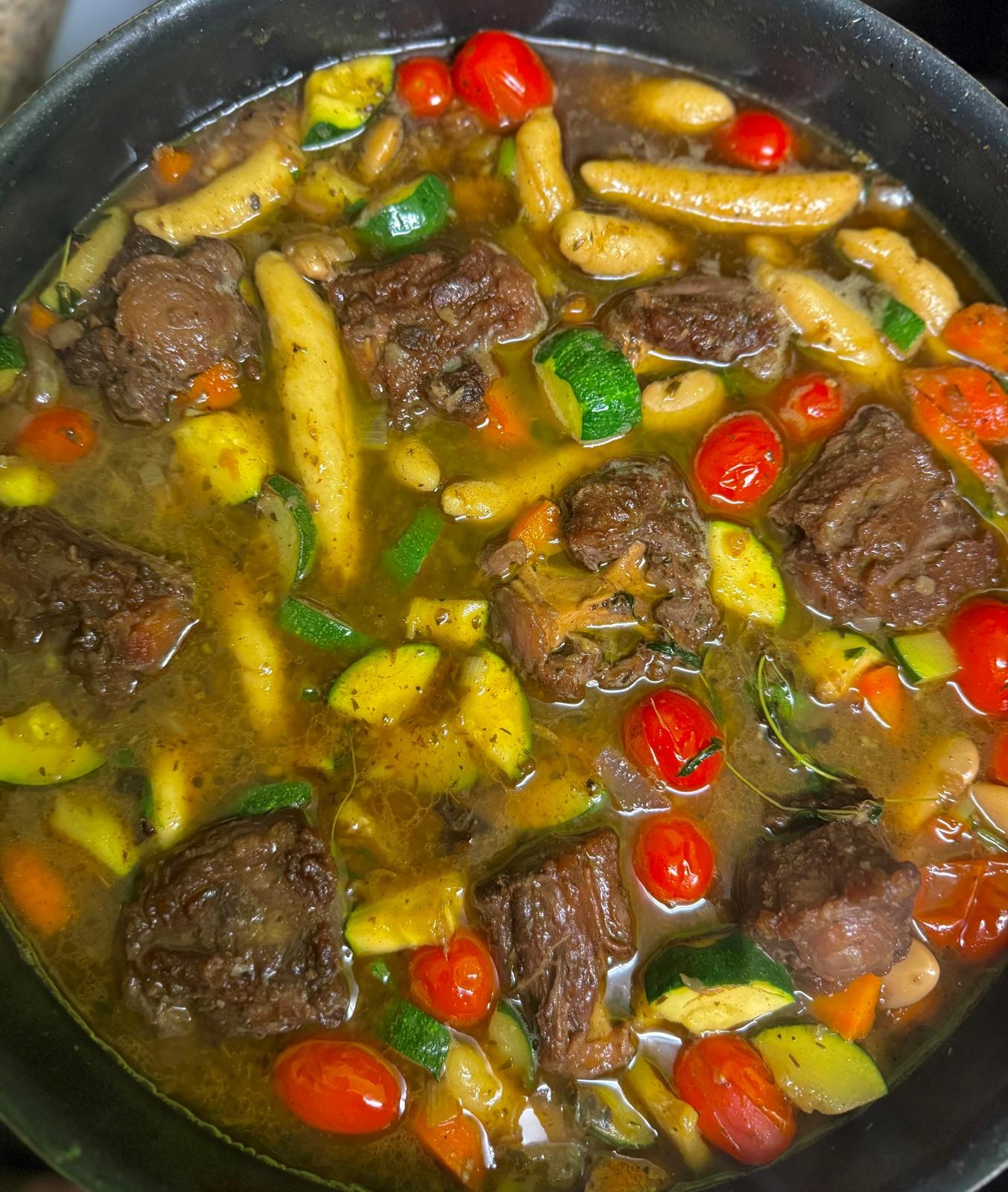
Real Jamaican stew is never rushed. Oxtail, brown stew, curry goat — they all need 2-3 hours on low heat to break down the connective tissue and develop flavour.

📜 The Method
Why It Works

Tougher cuts of meat (oxtail, goat, mutton, pork shoulder) are full of collagen. Slow cooking at low temperatures breaks the collagen down into gelatin, making the meat fork-tender and the gravy thick and silky. Rushing it produces tough, chewy meat.

How to Do It

After browning, lower the heat to a gentle simmer (just bubbling, not boiling). Cover. Check every 30 minutes, adding water if needed. For oxtail allow 2.5-3 hours. For curry goat, 2 hours. Pressure cooker can speed this up to 45 minutes.

7
Aromatic Trinity

Scallion, Thyme, Garlic

The Jamaican holy trinity — fresh scallion (green onion), fresh thyme and garlic. Together, they form the aromatic backbone of nearly every savoury dish.

📜 The Method
Why It Works

Where French cuisine has mirepoix (onion-celery-carrot), Jamaican cuisine has scallion-thyme-garlic. Each ingredient complements the others — scallion brings freshness, thyme brings earthy depth, garlic brings pungency. Always use fresh thyme — never dried.

How to Use It

Crush garlic cloves with the side of a knife. Slice scallions thinly. Tear thyme sprigs and bruise them between your palms to release the oils. Add to the pot at the start of cooking, alongside your other aromatics.

8
Wash & Clean

Washing the Meat

A non-negotiable step in every Jamaican kitchen — washing meat with vinegar, lime or lemon juice before seasoning. This is cultural, not just culinary.

📜 The Method
Why It Works

Whether for hygiene, removing the "blood" smell, or simply because grandmother said so — Jamaicans always wash their meat. It also gives the surface a slight acidic tang that helps the marinade stick. It's a ritual as much as a technique.

How to Do It

Place the meat in a large bowl. Cover with cold water. Add a splash of white vinegar or the juice of 2 limes. Rub the meat with your hands. Drain. Repeat. Pat dry with paper towels before seasoning.

The Jamaican Kitchen

What's in Every Yaad Pantry

You don't need fancy equipment to cook authentic Jamaican food — you need the right pantry. These are the essentials in every Jamaican kitchen.

  • Browning sauce — Grace or Lee & Perrins, for that signature dark colour.
  • Pimento (allspice) berries — whole, not ground. Toast them yourself.
  • Jamaican curry powder — Betapac or Blue Mountain. Different from Indian curry.
  • Scotch bonnet peppers — fresh, not powder. Keep some in the freezer.
  • Fresh thyme — never dried. Grow a pot if you can.
  • Scallions — buy them in big bunches.
  • Coconut milk — Grace canned is the standard.
  • Soy sauce & ketchup — surprisingly important for stew gravies.
  • White vinegar & limes — for washing meat.
  • Brown sugar & molasses — for cakes, marinades and rum punch.
  • Saltfish — dried codfish. Soak before cooking to remove excess salt.
  • Red kidney beans & gungo peas — for rice and peas.
Jamaican Pantry
Ready to Cook?

Put It All Together

Now that you know the techniques, put them into practice. Browse our recipes — each one uses these methods to deliver authentic Jamaican flavour.

Browse Recipes Jerk Guide